
Nexus Catalyst
Dialogues at the Frontier of Ecology, Justice & Visual Research
"Knowledge should no longer remain confined within ivory towers, dusty archives, or closed academic circles. Nexus Catalyst is a bridge designed to move theory out of abstract philosophy halls and into the heart of field action. This series connects the brightest minds from prestigious global research networks and intellectual hubs with tomorrow's 'Sentinel' candidates. Our goal is to merge rigorous interdisciplinary depth with the digital energy of young researchers, building a resilient 'Truth-Infrastructure' in the face of 'Data Silence.' Every dialogue featured here is more than an interview; it is a mental 'catalyst' designed to construct ecological and social justice."
Volume 2
Bradley Secker | Mapping Displacement and Resilience
We continue this series with Bradley Secker, a British photojournalist and National Geographic Explorer who challenges the boundaries of traditional reportage. Based in Istanbul, Bradley's work goes beyond the surface of the image to investigate the intersection of identity, migration, and environmental adaptation. He demonstrates that "home" is not a fixed point on a map, but a shifting territory shaped by socio-political decisions and a changing climate. Bradley invites us to see the displaced person not as a victim of a crisis, but as a "Sentinel" navigating the repercussions of a volatile global landscape.
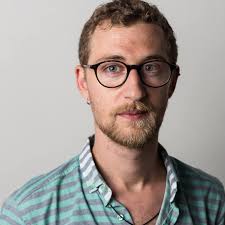
Bradley Secker
British Photojournalist and National Geographic Explorer
Bradley Secker is a freelance photojournalist whose work explores the human consequences of socio-political change. A National Geographic Explorer since 2018, his practice is rooted in long-term visual documentation, utilizing conceptual approaches to visualize issues that demand longevity and impact. His seminal projects, Kütmaan and Gayropa, represent the first comprehensive visual histories of queer migration from the Middle East to Europe. Regularly contributing to The New York Times, The Guardian, and National Geographic Magazine, Secker bridges the gap between traditional journalism and visual research, documenting how communities navigate the complex realities of identity and our changing environment.
What first drew you to documentary photography, and was there a moment when it began to feel like a way of understanding the world, rather than simply capturing it?
I was always interested in geopolitics growing up, and originally hoped to become a journalist, in the printed word sense, but then studied photography at art college. After discovering photojournalism I decided this was more my route, and loved that it was liberated from languages, and instead was a universal language, so began the long and unstable road of trying to forge a career within the industry.
It does feel like a way of understanding the world, and always has, as it takes you to the forefront of the issues and topics being covered, on the ground, and meeting people involved. The more difficult part is putting that into a photograph, or series of photographs that are able to convey that reality to the viewer, without the need for language, or extensive captions.
Have you encountered moments where the act of photographing felt ethically ambiguous? How do you negotiate the tension between the impulse to document and the responsibility to refrain?
Yes, often, and increasingly so with the proliferation of social media, and the internet age. The ethical responsibility of being honest and fair with those you're photographing has never been greater, given that now everyone can see everything. There was a point when the people you might have been photographing would likely never see the final photographs, or end product, but now everything is omnipresent.
There are multiple nefarious actors that might bring negative consequences on those I'm photographing, from hostile states, to extremist groups and other non-state actors, as well as the friends and relatives of those depicted. It's always best to be open, honest, and despite maybe seeing an amazing image potential in front of you, to realise and accept the valid concerns that people might have, especially at protests, nightclubs, particular community events for example.
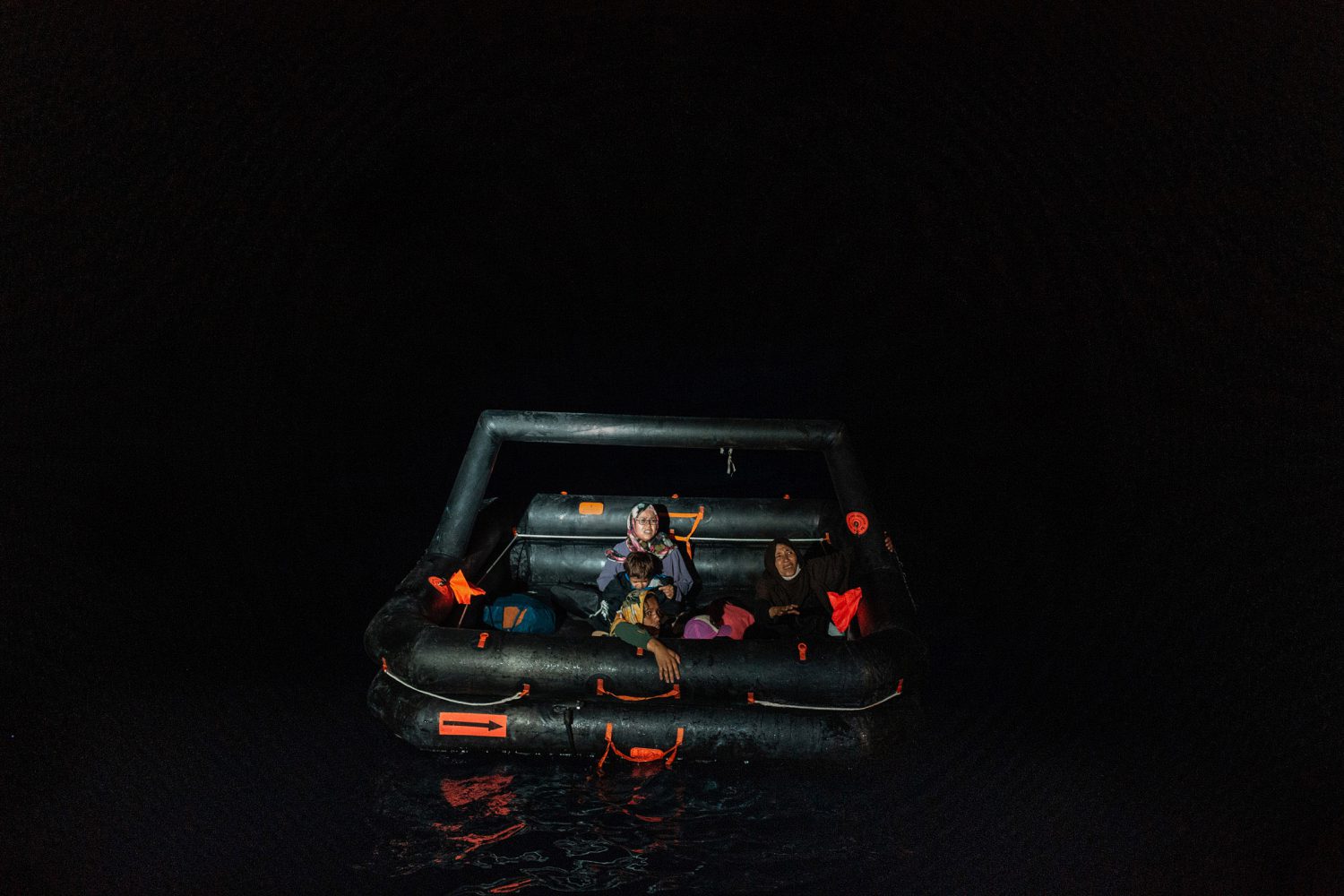
A life raft carrying Afghan citizens in the Aegean Sea, captured during Bradley Secker's long-term investigation into Pushbacks in the Aegean. Photo: Bradley Secker.
Your work often engages with themes of migration and identity. Has working on these topics changed how you think about "home" on a personal level?
Home is a fascinating concept and topic, and obviously something I've covered a lot through my work. I am an immigrant, an emigrant, and my sense of home is a little in flux. I've lived outside my native Britain for almost all of my adult life, by choice. I've made a new home in several countries over those years, the longest here in Istanbul, which still feels like home today, despite always being seen as the foreigner when wandering around.
I do still feel a strong connection to eastern England, and Norfolk, where I grew up, and it's filled with nostalgia and memories, and I visit often.
When someone encounters your work, what do you hope stays with them after the image is gone?—understanding, empathy, or something else?
Empathy, an understanding of the issue in the photo, or the person's life and situation, and an appreciation of what they might be living through. If someone goes away having remembered one of my images or series, I'd be pleased that the work has had some small imprint on their memory.
To what extent do you think photography can represent reality, especially in contexts shaped by displacement and trauma?
There is a long and winding debate about how much this is true, and to what extent being there with a camera can alter the reality, and interactions with people. I believe that if done sensitively and respectfully photography can very much represent realities, especially if the photographer stays in an area for a while, so people tend to forget their presence as much, and stop any sense of performing for the camera.
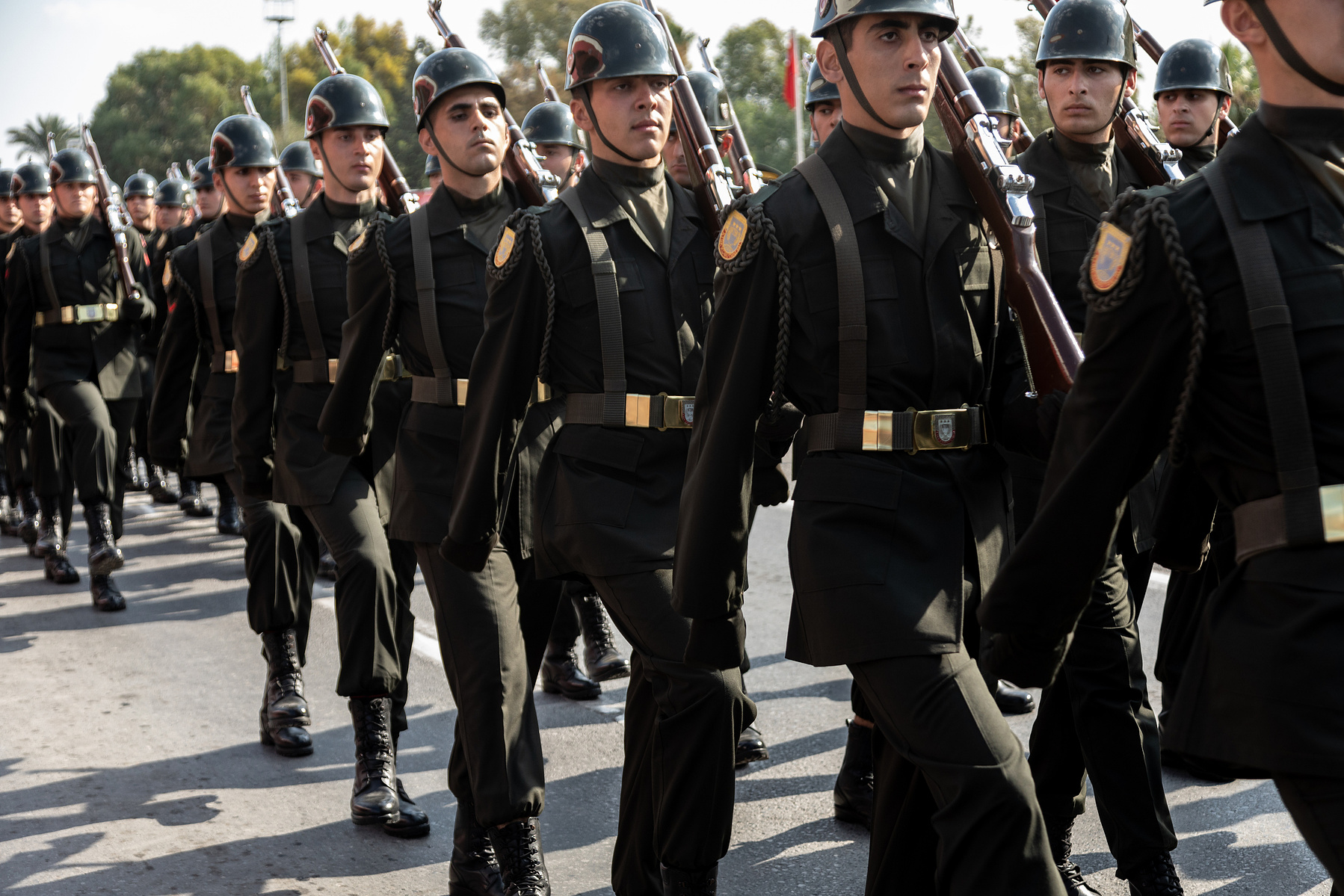
A military parade in Northern Cyprus, documented by Bradley Secker as part of his TRNC – unrecognized series, exploring the layers of sovereignty in legally unrecognised territories. Photo: Bradley Secker.
When documenting other people's experiences, how do you negotiate the line between witnessing and speaking on behalf of someone else?
The role of a photographer or photojournalist is essentially to show the experience and reality of someone else, to someone else, you're the middleman/woman. I am often asked to write about the photos I have, and of course I'm not trying to be the protagonist's voice, but to simply and factually give context and an explanation to the visuals. Photography has more space for people in the images, and the scenes depicted, to speak for themselves, than other forms of media, if you give it a few seconds of your time.
In the stories you document in Gayropa, belonging seems constantly shifting. Do you think the need to belong is real, or is it something we've been taught to seek?
Belonging is constantly shifting, for all of us I think. For those in the Gayropa series, and other sub-projects on the topic of forced migration of LGBT+ people, I've learned from them that the need to belong is real, and mostly found within the community, rather than in a physical location. Online spaces are often where people now feel they belong, but physical belonging is real too, and given the opportunity I think the people in those photographs just want a stable place to live their lives freely, openly, and with some sense of long term stability and calm, without legal or security threats.
Why did you choose photography as your medium, and based on your experience, what would you say to those hoping to pursue this kind of work?
Photography is a kind of magic, a kind of truth, a kind of evidence. It has no linguistic restrictions, can open doors to many worlds, and serves as a legal and societal reference to the past and the present. It can be steeped in nostalgia, in emotions a photograph might conjure up. When you're looking through old photos of you and your family, I'm sure you feel something, and it might be different to a written note or text. A photo is there waiting to be looked at, and we project some of our feelings, stereotypes, and emotions on to it, but it can't be changed, and people might see things differently.
For people trying to pursue this type of work, I'd say it's harder than ever, unless you're privately wealthy. The industry is a mess, budgets are being slashed from all sides, and the younger generation seem less interested in factual photography, so it'll be a long, underpaid and overworked uphill battle. A.I. obviously has a role to play, creating an atmosphere where people are often reluctant to believe a photograph anymore, or the publisher running it, if they feel the media isn't telling the truth, or has a clear political leaning. These issues aren't specific to photojournalism, but journalism and the media more widely, and therefore society's perception of reality, truth, and trust. Unfortunately I believe the future seems rather bleak for our industry as a career.