Nexus Catalyst
Food as Bait, Guilt as Distraction — On Economic Disparity, Structural Constraint and Emergent Work
"Knowledge should no longer remain confined within ivory towers, dusty archives, or closed academic circles. Nexus Catalyst is a bridge designed to move theory out of abstract philosophy halls and into the heart of field action. This series connects the brightest minds from prestigious global research networks and intellectual hubs with tomorrow's 'Sentinel' candidates. Our goal is to merge rigorous interdisciplinary depth with the digital energy of young researchers, building a resilient 'Truth-Infrastructure' in the face of 'Data Silence.' Every dialogue featured here is more than an interview; it is a mental 'catalyst' designed to construct ecological and social justice."
Volume 6
Tunde Wey | Food as Bait, Guilt as Distraction
Nigerian social practice artist Tunde Wey uses food, finance and performance to confront economic disparity — not because food is special, but because it works. In this conversation, he speaks about the limits of guilt, the pragmatics of taking money from systems you critique, and why structural change has more to do with circumstance than intention.
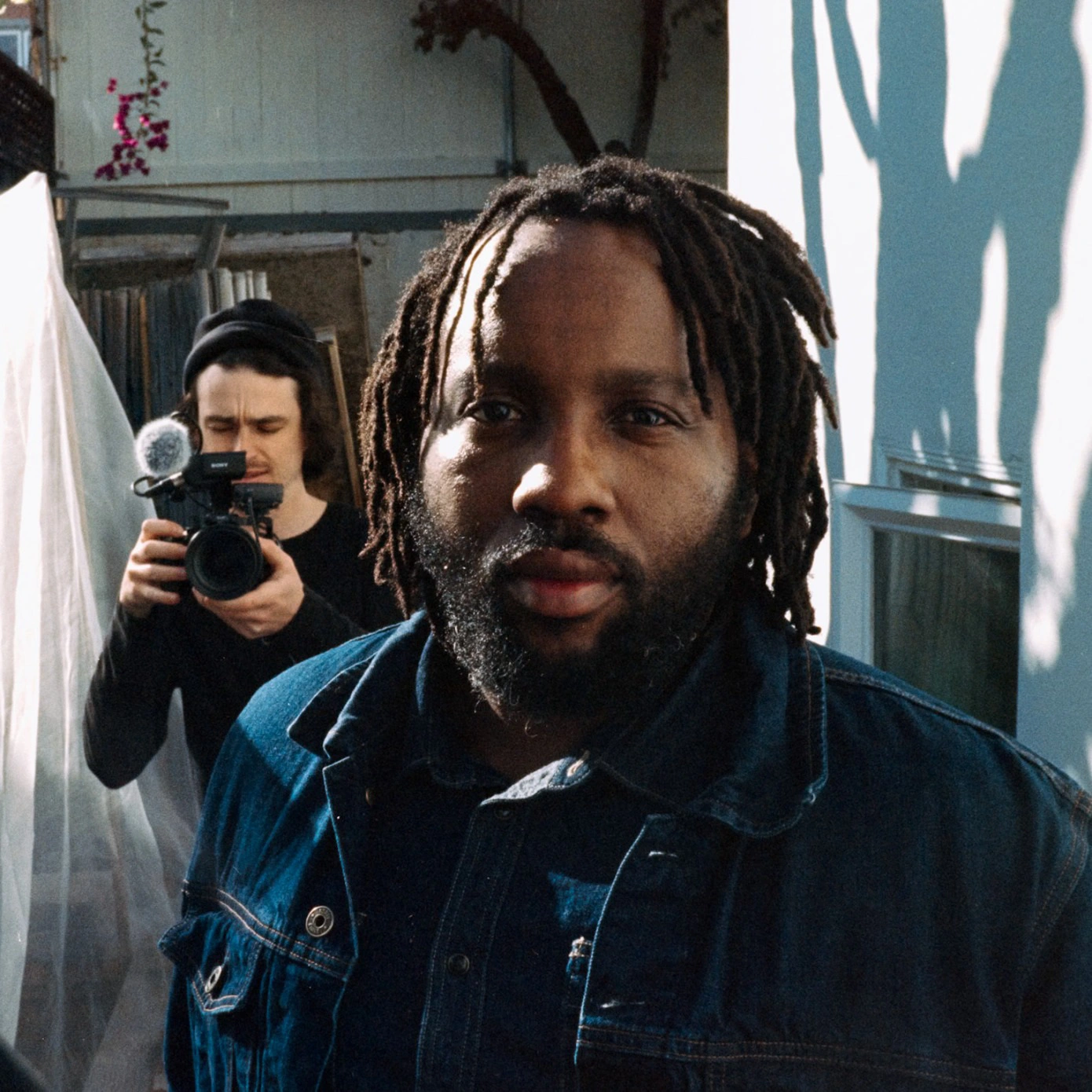
Tunde Wey
Chef, writer, and social practice artist
Tunde Wey uses food, finance and investment capital to do something most artists avoid entirely: make economic disparity impossible to ignore. At his dinners, white diners pay two and a half times more than Black diners — not as provocation for its own sake, but as a precise reflection of New Orleans's documented income gap. The price is the argument. The meal is the evidence.
Born in Lagos, he came to the United States at sixteen, lived for years without legal status, and built a body of work that now spans performance, film, writing and finance. His docuseries is a 2024 CANNESERIES Official Selection. His forthcoming book of essays will be published by MCD / Farrar, Straus & Giroux.
→fromlagos.comFood is the medium you're known for — but you've said there's nothing inherently special about it. What is it actually doing in your work?
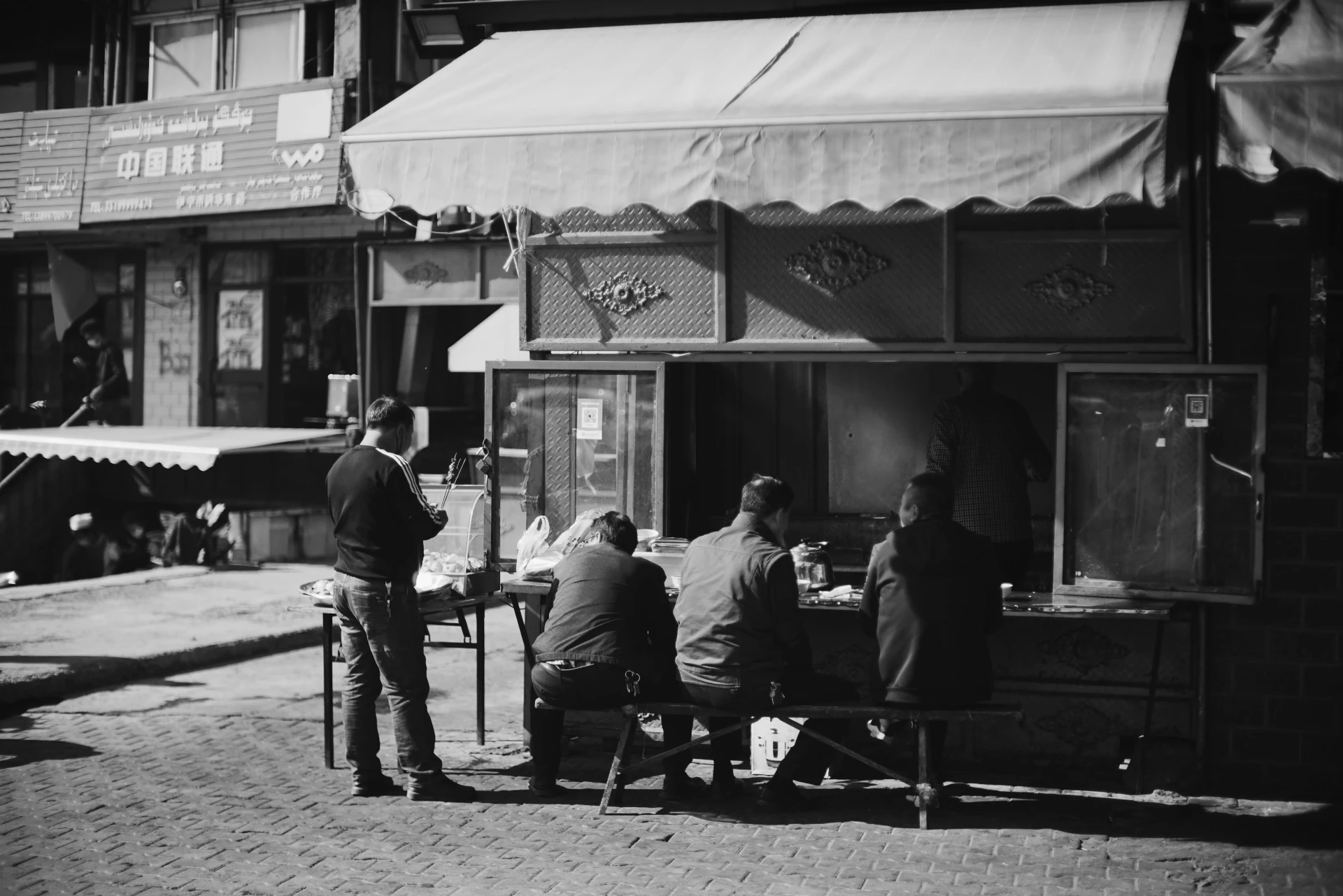
So the truth is that we did it, we found the data, so we can turn the inequality. I don't think that food — or certain food, if you're using food as a medium — does anything different than using music, or using your hands, or whatever it is that you're close to. It is different because food is just materially different, depending on the culture. But I don't think there's necessarily something inherent to food that makes it more effective or more articulate in describing what the challenges and conditions are. I think it's due to circumstances. In certain circumstances, food might be more effective, but there's nothing specific about food. The way I use food is almost as bait — a way to get people together, a way to get people to a conversation, to a table to have those conversations. But I think you can have serious conversations anyway. You can do it through sports spaces, religious spaces, arts, visual, music. Food happens to be the medium that I use. Another interesting thing about food is that it intersects with other aspects of our social, economic, communal life — the production of food, its distribution, its sales, what it says about consumption habits. It allows the work to be both conceptual but also grounded in the material. I use food conceptually, but there's a whole material life to food that a lot of people who are working through it rely on almost exclusively. I'm interested in that material, logistical life — because it is tied directly to our economic and social systems. And at one point in my work, in the community integration work, people know that this is more than a dinner, almost immediately. Restaurants are already a kind of performance space. There is a performance of service, of convenience, of luxury. My work integrates into that. When people go into a restaurant or food space, they're expecting something — they expect the food to be delicious but they also expect the social experience. I state upfront the type of violence that is present. You don't have to find what the performance is — it's apparent.
At Nexus, we think a lot about how to move communities from passive observers to active participants. How do you think about the difference between making someone feel guilty and making someone act?
That's a great question. I guess I'm thinking about what the role of guilt is. And also, more importantly — a lot of us, as political actors, are constrained significantly. I got this framework from someone: we have a sphere of interest and a sphere of influence. For a lot of us, the sphere of interest is wider than the sphere of influence. That is the constraint we feel. When we exert effort to change circumstances, we're limited in two ways. First, we're constrained by the nature of systems. If you overcome that constraint and change things, we're also constrained by time. Because when you're able to overcome the first constraint — the structure of the individual — by gathering into a grassroots movement, the net effect changes. But the system is very resilient. Over time it tends towards its purpose. There might be cosmetic changes at first, but the system tends to revert. Systems break or change in favor of a group of people that have been marginalized only as a function of effort, but also as a function of circumstance. We live in a particular time right now — political fracture, more inward looking, more conflict. Governments are death-gripping resources. My work is a way to first reflect what I think the challenges are. And maybe in some cases offer — not a solution — but a response. But highlighting the challenges, offering a response, is not the same as saying that if we work in this direction, change will come. Because of the two constraints I mentioned. What will maybe change is the change of circumstances. Circumstances arise as a result of different actors acting independently of our own concept of those circumstances.

I grew up in Nigeria. We had a dictator — that's what they called him at the time. He was brutal, consolidated power, had a tight grip. And then one day he died, just like that. Some people speculated he was killed, whatever. Before he died, nobody imagined the country could go on without this person. The day after he died, a lot of things changed — and some things still feel the same. So that idea that anything is possible, that we are not in charge of what is possible, but we control what we can do to face the possibility — that's what I hold onto. Guilt, and those other responses — they're real. But guilt is often the result of a certain kind of social programming, a certain kind of ideological perspective. It makes you feel like certain actions or choices you've made are bad and you have to work towards fixing them. Guilt is not necessarily bad. But guilt isn't the main constraint. The main constraint is structural reality. The other things — the inadequacy, the guilt — those are not constraints as much as they are conditions for the kind of change we are looking for.
“Before he died, nobody imagined the country could go on without this person. The day after he died, a lot of things changed — and some things still feel the same.”
You've received support from major cultural institutions while your work directly criticizes the systems those institutions are part of. How do you navigate that?
I have no problem with it at all. I was thinking about this recently. Socialists — I'm not even sure what those things are. I'm not an economist. I haven't spent years studying the economy. Use value versus exchange value — I don't know what that is precisely. After Marx there were many people who extended and contested his work. All these theoretical strands come from different ideological trees. For me, the question is simpler: what do I care about? I care about not looking disparaging. I'm trying to get clearer and clearer about the things that are important to me. Capitalism is dynamic. It mobilizes resources, allocates them in such a way as to grow and incentivize people, to grow something like collective wealth. We see the impact of capitalism in technological advancements and in the material well-being of people. But capitalism, so far, cannot address inequality. It just doesn't know how to do that. Socialism, on the other hand, addresses that — but may not catalyze innovation the same way, may not offer the same incentives. Different systems have their own failures. What I know is: I'm interested in working with people that are in a difficult situation. I know that in the capitalist system, a lot of the gains come at the expense of working class people. So with all these beliefs — how can I work to create more opportunities for working class people, working class people of color, people in the Global South? The world I want to see is more egalitarian. The world that exists right now is not. So I have no problem — because I'm not a moralist — using resources from this world to create a future world. I also don't believe there is any separation between this world and the future world. Everything that is going to exist is already inherent in what exists. People who are building things — a magazine, a company, a movement — have to deal with the world as it is. If you're theorizing, you can afford to live in the world as you want it to be. If you're building, you have to make it from what exists. Part of what exists is money and resources. Using them in ways that align with my ideological position, or that don't suppress it — I have no problem with that.
How do you measure whether a project was successful?
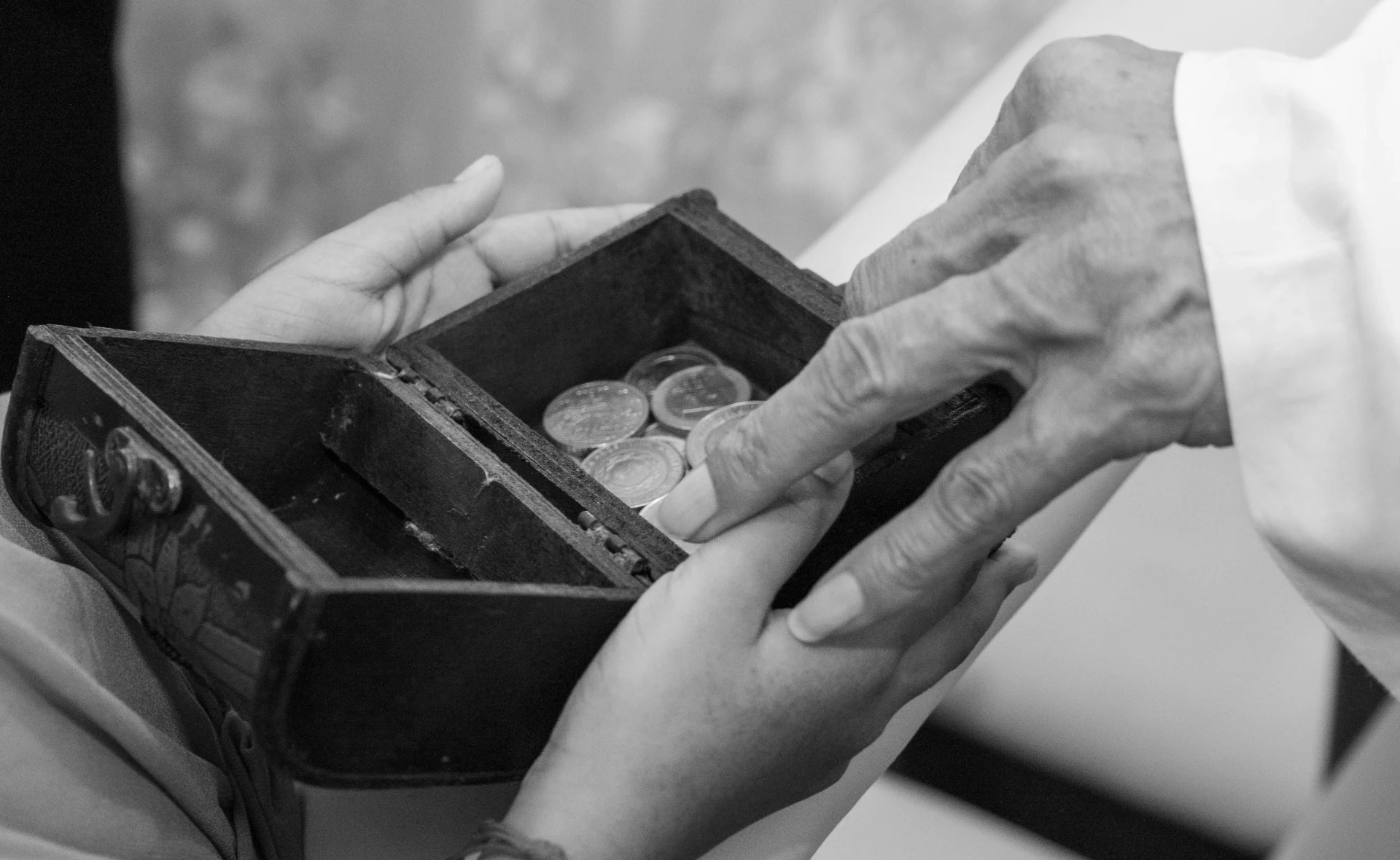
In one way, just as a person who's making public work — success in its simplest form is keeping the work going and keeping the resources to make work. If there's some sort of public attention, I can raise my profile so I can keep doing this. I have very limited power — and also too much power relative to the things I'm about. I can't think about what success means in the macro sense. If one person has shifted their perspective toward mine, maybe I'll call that a success. Maybe. But sometimes — the first person I'm working to influence might be, ten years from now, someone I've actually sent away from that perspective. So I hold that calculation lightly. My interest is: if I can move the needle, go for it. But in terms of structural change — all the changes I speak about — if it's change, how do you even measure it? It's too big. It's not what my interest is.

What question do you wish people asked you — but almost never do?
I'm always learning about what the project is even after I've done it. I don't come with a set list of proposals or information to distribute. So long after I've done something, I'm still thinking — oh, I didn't even know I was doing it like this. I try to create a framework that is tight, and then within that premise, it's almost like improv. You get a script and somebody says: walk into a room and discuss this. How the discussions go, the length, the emotions — those are up to the individual actors. I just want to create the premise and the inner framework. Whatever happens from there is generative, emergent, not in my control. If people don't get something, them not getting it — that's fine. It becomes part of it.

What would you do with the Sakarya River?
Sell water from it. You want to create an economic narrative. Sell bottles — symbolically, or actually filled from the river. Make them expensive. It doesn't matter exactly where the water comes from — what matters is what the price represents. You're tying the water you're selling to the river, to what's been done to it. How much does it cost to remediate a river? Sell a hundred bottles at a thousand dollars each. Not because of the water. Because of what that number means — because of how much it is going to cost to fix what has been taken. The river becomes the argument. The price tag becomes the data.